

Trees and Bees Both Deserve Our Respect!
- Trees provide shelter, nectar and pollen for bees.
- Bees transfer pollen from tree to tree during the blossom season, encouraging pollination and the survival of ecosystems.
- This mutually beneficial relationship allows hives to thrive and puts honey on breakfast tables around the world.
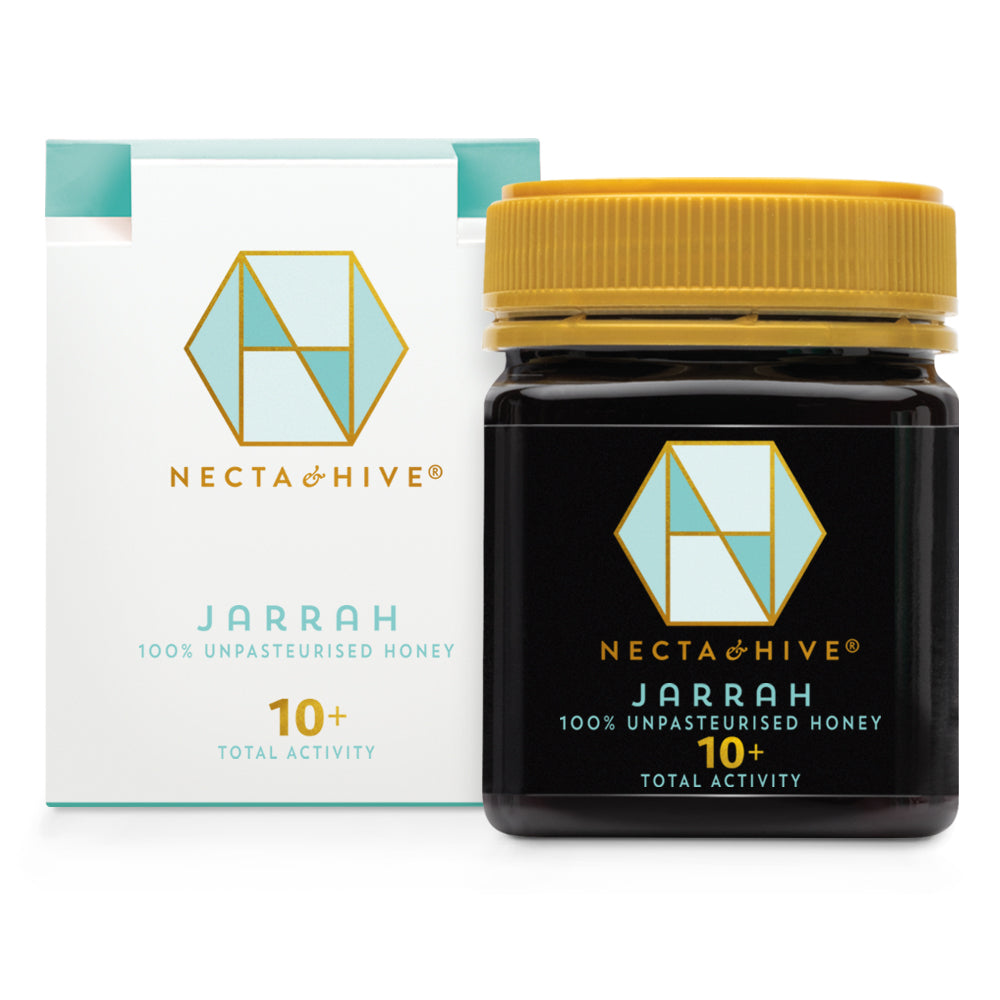
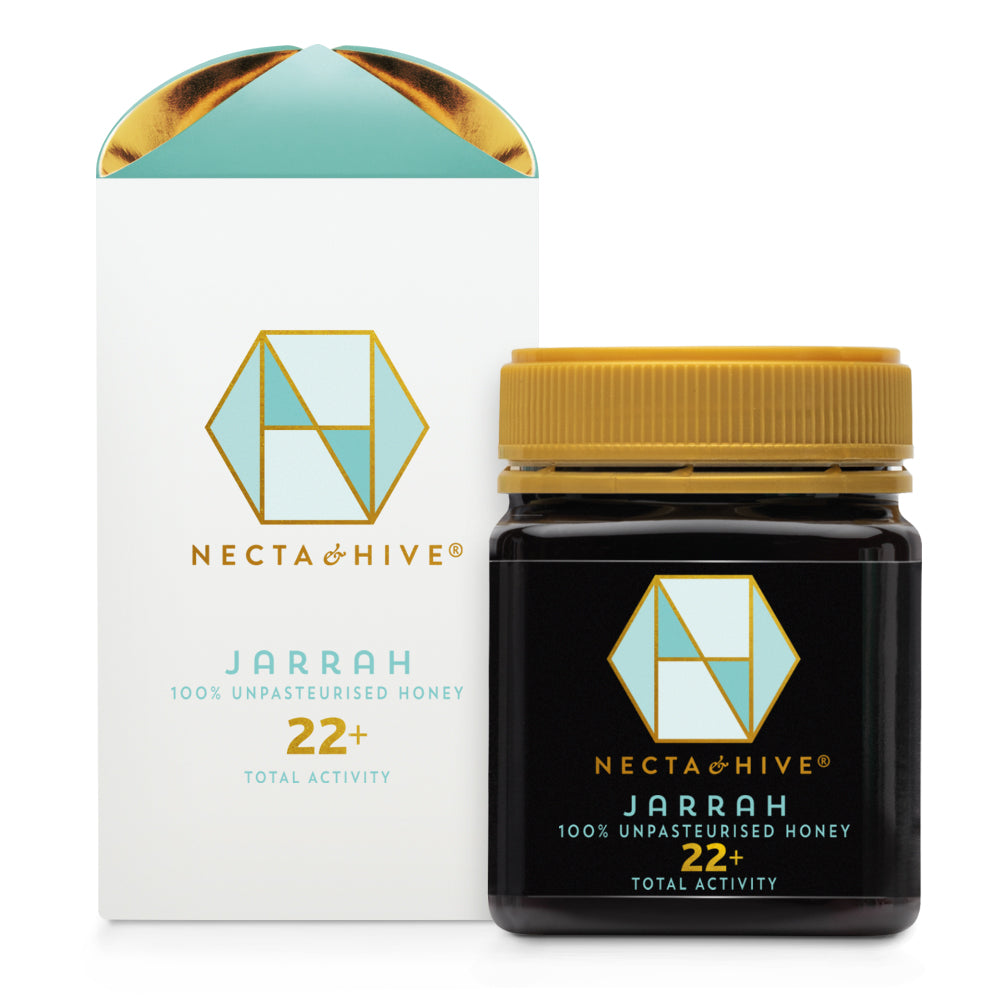
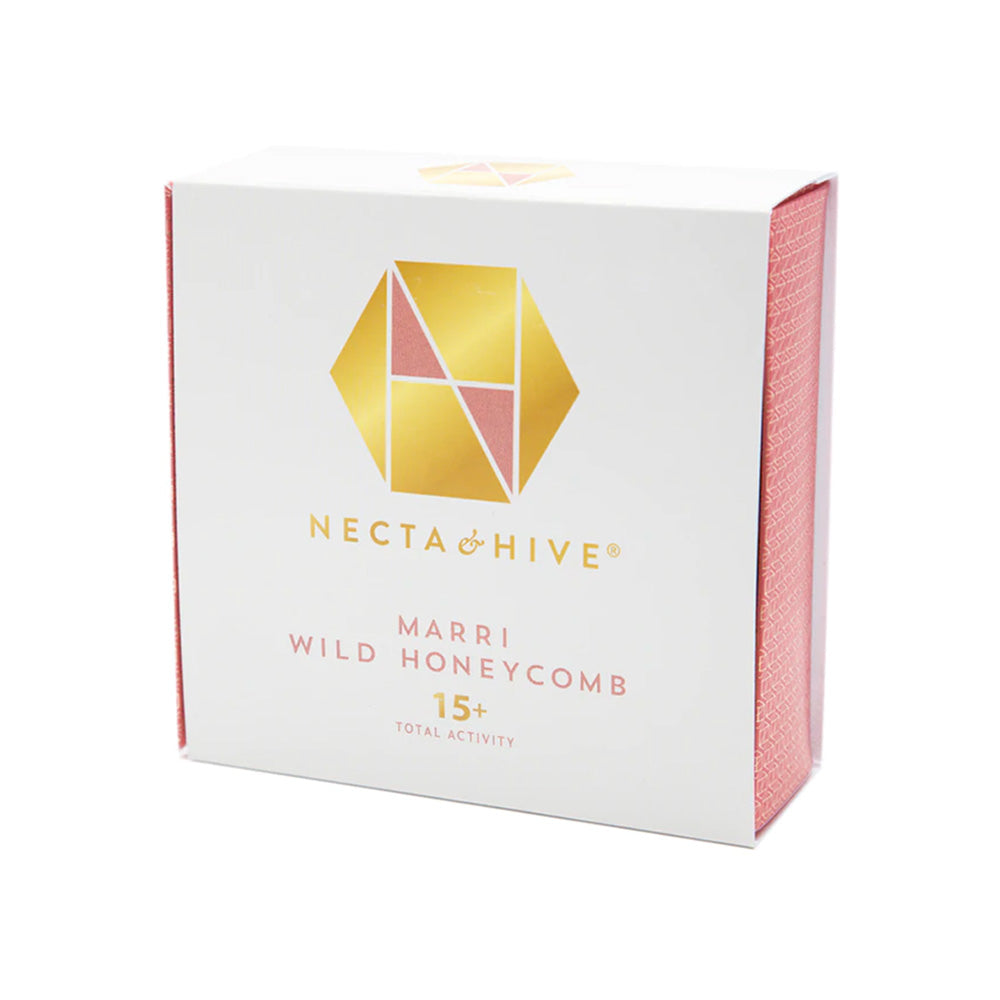
- Necta & Hive honey is produced by bees free to forage on Jarrah and Marri trees, which are native to Western Australia and are both members of the eucalyptus family.
Explore Jarrah and Marri honey
It’s safe to say that we love honey around here. Not just any honey, but active, healing honey that’s rich in antioxidants, anti-inflammatory compounds and antimicrobials. Honey, just like ours at Necta & Hive.
We love honey so much that it’s part of our daily diet. But we also love the busy creatures that make it possible for us to enjoy their hard-earned, sweet produce – honey bees. What we love most about them is the beautifully symbiotic relationship they have with the trees and flowering plants around them.
It’s easy to make the connection between honey, bees and trees, but did you know how important this delicate dance is? Let’s take a closer look at this relationship between trees and bees, which is particularly pertinent as we celebrate Earth Day this April.
How Trees Help Bees
Hollows, nooks and crannies in the gnarly trunks of old, established trees provide safe havens for solitary bees and welcome rest spots for tired bees. But most important is the food that trees provide. Bees forage for both nectar and pollen, and flowering plants, including blossoming trees, provide both.
Nectar is a sweet, sticky fluid found deep inside a flower or blossom, and provides sugar to bees who use it for energy to power their flights. Pollen is the yellowy-orange dust found on the male stamens of plants. As bees collect nectar and pass it down to their stomachs (ready for producing honey when they return to the hive), pollen gets stuck on their hairy legs and backs…
How Bees Help Trees
…It’s this accidental pollen transport that does the blossoming tree or flowering plant a favour. When pollen is introduced to the female stigmas of neighbouring plants of the same species, pollination occurs, allowing for reproduction. As bees travel from one flower to the next, they’re pretty much responsible for the survival of that plant species by introducing the pollen produced by the male plant to the female plant, allowing ecosystems to prosper.
Jarrah and Marri Trees
Jarrah and Marri (also called Red Gum) trees are part of the eucalyptus family and are native to the forests of Western Australia. Necta & Hive honeys are produced by bees free to forage on the blossom produced by these trees grown in responsibly managed forests. In some parts of the world, the fast-growing nature of the eucalyptus tree species is exploited, and they’re grown for intensive farming, using pesticides and vast amounts of water in non-native environments.
We pride ourselves on sourcing from honey producers who value native forests that can be left to flourish without intensive farming practices or pesticides, allowing bees and trees to do their jobs and support each other naturally. But with a very short flowering season and only then, once every two to four years, this honey is premium!
So, what better way to mark Earth Day 2026 than by supporting this natural relationship by indulging in a jar of the most amazing-tasting honey?