

Why Splashing Out on High-Quality Honey Matters
· Active, healing honey costs more to produce as it’s sought-after and harder to produce.
· High-quality honey is rich in antimicrobials and antioxidants that support immunity and gut health.
· Cheap, squeezy honey is often simply sugar syrup flavoured to taste like honey and has zero health benefit.
· Paying more for Jarrah and Manuka honey is worth it for the health benefits.
They say you get what you pay for, and that’s particularly true when it comes to food. What we put into our bodies has a lot of say over what we get back from them. Eating quality, fresh produce means we have a better chance of living a fulfilling, healthy life. Active healing honeys, like Manuka and Jarrah, can play an important role in a healthy, balanced diet. Just check out our top honey salad dressing recipes if you’re unsure!
The emphasis here is on quality. Quality honey costs more, but why?
Why is Quality Honey More Expensive?
When we talk about quality honey, we mean active honey. Active honey contains antibacterial and antimicrobial properties, as well as antioxidants, anti-inflammatories, enzymes and prebiotic fibre (which the bacteria in our guts thrive on). Jarrah honey is rich in valuable micronutrients and, when eaten regularly, can support gut health and a strong immune system.
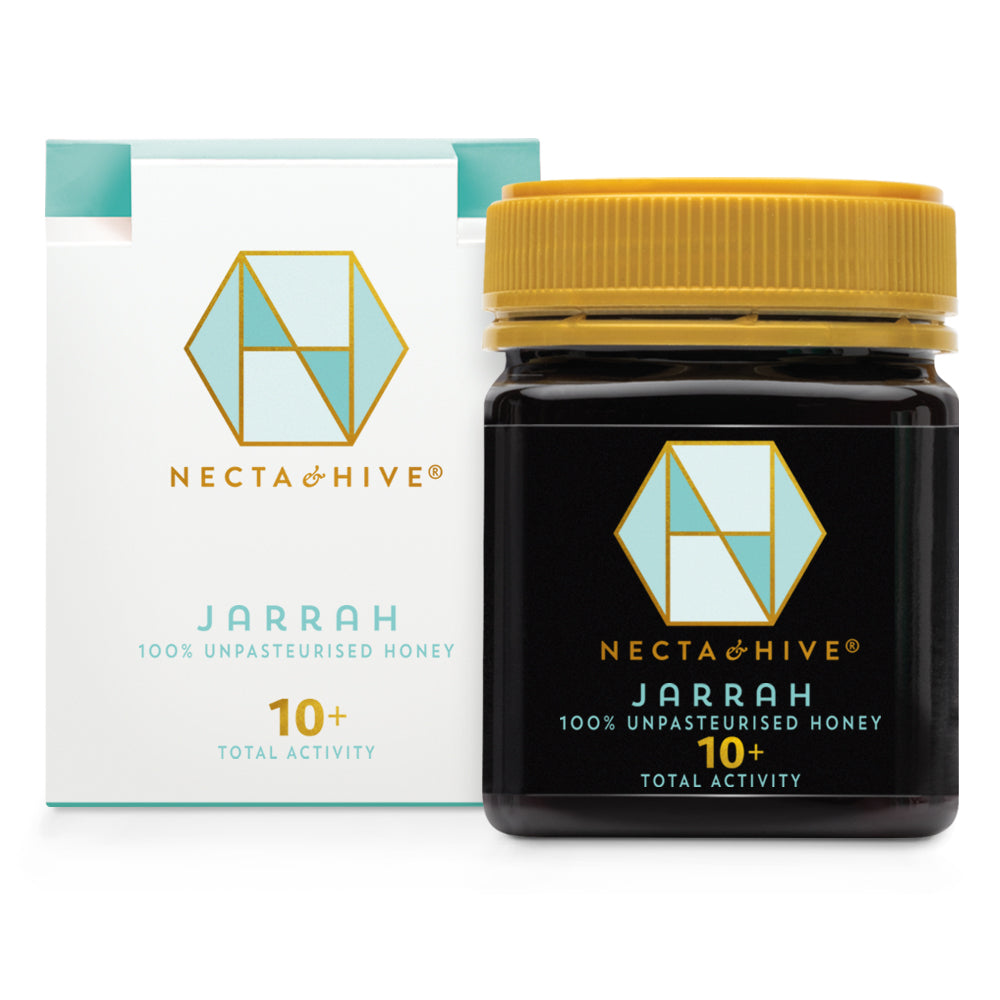
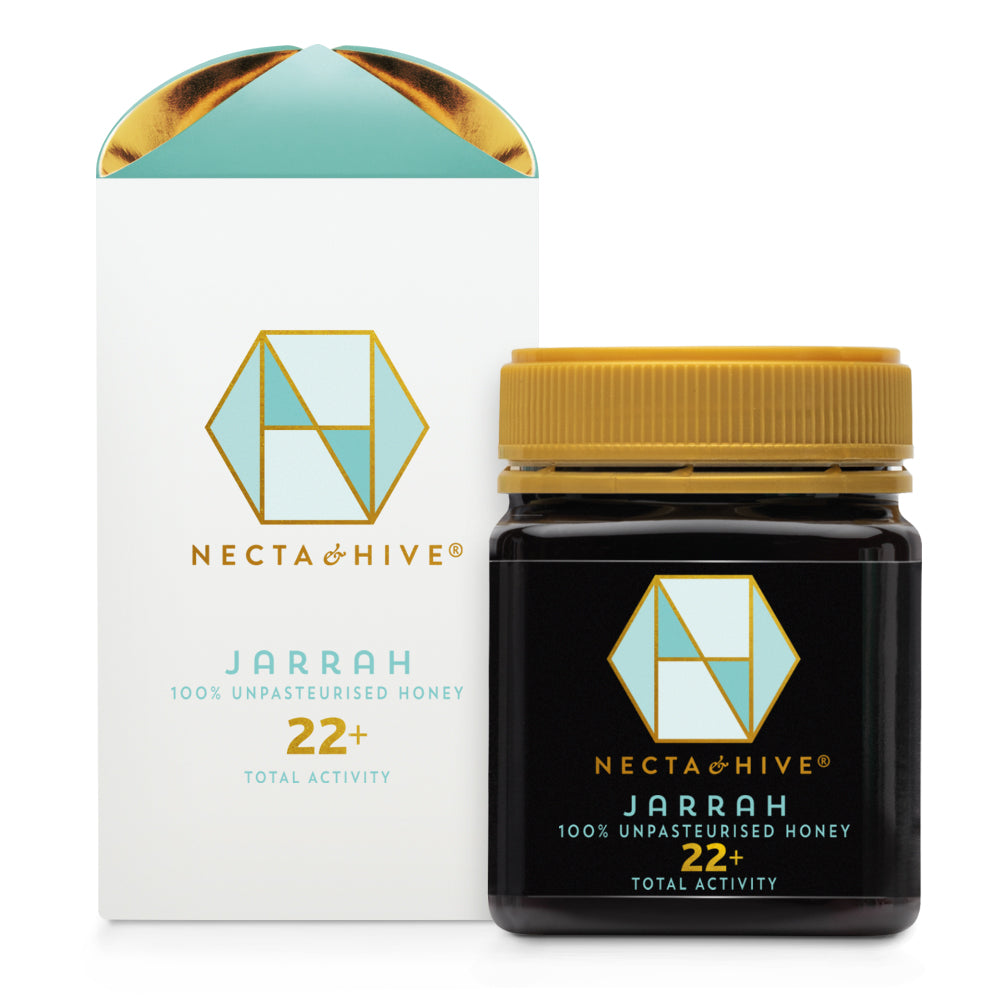
Jarrah honey is the Western Australian equivalent of New Zealand’s Manuka honey. It’s an active, healing honey rich in antimicrobials, antioxidants, anti-inflammatories and micronutrients. Consuming Jarrah honey regularly may help protect against coughs, colds and seasonal allergies and support the immune system and the gut.
But all these health-supporting properties come at a price, quite literally.
The Jarrah tree, native to Western Australia, only blossoms every two to four years. This means that honey-producing bee farms can only harvest their sought-after golden nectar every two to four years. Jarrah honey is often referred to as a monofloral honey, meaning that the bee hives are positioned such that the bees are free to forage for nectar on these trees only, and only when they blossom.
Hence, Jarrah honey (and Manuka, which has a similarly small window of harvesting opportunity) is a premium product, at a premium price. But well worth it for the health benefits you don’t get from eating cheaper honey.
What to Look for When Buying Quality Honey
Cheaper supermarket honeys are often simply sugar syrups, flavoured to taste like honey. Shockingly, recent research shows that nine in ten honey samples from UK retailers fail an authenticity test. That means that 90% of the honey we buy in the UK is adulterated with sugar syrup. While this isn’t dangerous per se, it’s dishonest, pointlessly calorie-laden and doesn’t even taste great.
Beekeeping and honey production are hard work, and not just for the bees. Therefore, if a squeezy bottle of honey is available at a price that’s too good to be true, it probably is.
To avoid buying fake honey, avoid products with vague, ambiguous labels, such as "blend of EU and non-EU honeys", which suggests the product has been mass-produced, probably in China (despite the UK-looking images on the packaging) and is probably ultra-processed. Instead, look for honey brands that proudly display the country their product comes from and the flower or blossom type.
Of course, budget matters. If you’re shopping for honey on a budget, consider spending extra and using less of it. Quality over quantity is definitely true when buying honey!
Looking for super healthy, high-quality honey? Of course you are! You’ll find it here. You can even save yourself up to 20% by subscribing and having Necta & Hive honey effortlessly delivered to your door each month.
If you've enjoyed our honey, we'd be so grateful if you could take 60 seconds to leave a Google review. It makes an enormous difference to a small business like ours.